ISSSE 2026


The 18th International Summer School on Software Engineering

University of Salerno, Italy

June 15-18, 2026

Logo

ISSSE 2026: Agentic Development - Software Engineering at a Crossroads

Turbo-charge your PhD and navigate research uncertainty in a fast-shifting field

Software engineering is at a crossroads. The rapid adoption of agentic development—AI systems that can plan and execute substantial parts of the software lifecycle—is reshaping how software is built, evaluated, and maintained. For PhD students and researchers, this is both an extraordinary moment of opportunity and a genuine source of uncertainty: never has it been easier to have impact, yet easier for a research direction to be disrupted by fast-moving tools, practices, and expectations.

In this rapidly evolving landscape, the 18th edition of the International Summer School on Software Engineering (ISSSE 2026) is designed to help you navigate this transformation.

This summer school brings together industry leaders and practitioners from major tech companies (including Google, Microsoft, and Meta) working on the technologies transforming software engineering today, alongside outstanding researchers—both established figures and rising stars in the software engineering community. You’ll hear the latest developments from industry and academia, and you’ll have opportunities to get feedback and guidance on your research ideas from experts at the forefront of this shift.

Whether you are exploring your research direction or looking to strengthen and reposition your work, ISSSE 2026 offers a unique opportunity to connect, learn, and grow within a vibrant international community.

And where better than the beautiful bay of Salerno for such an intellectually transformative experience?
Invited Lectures

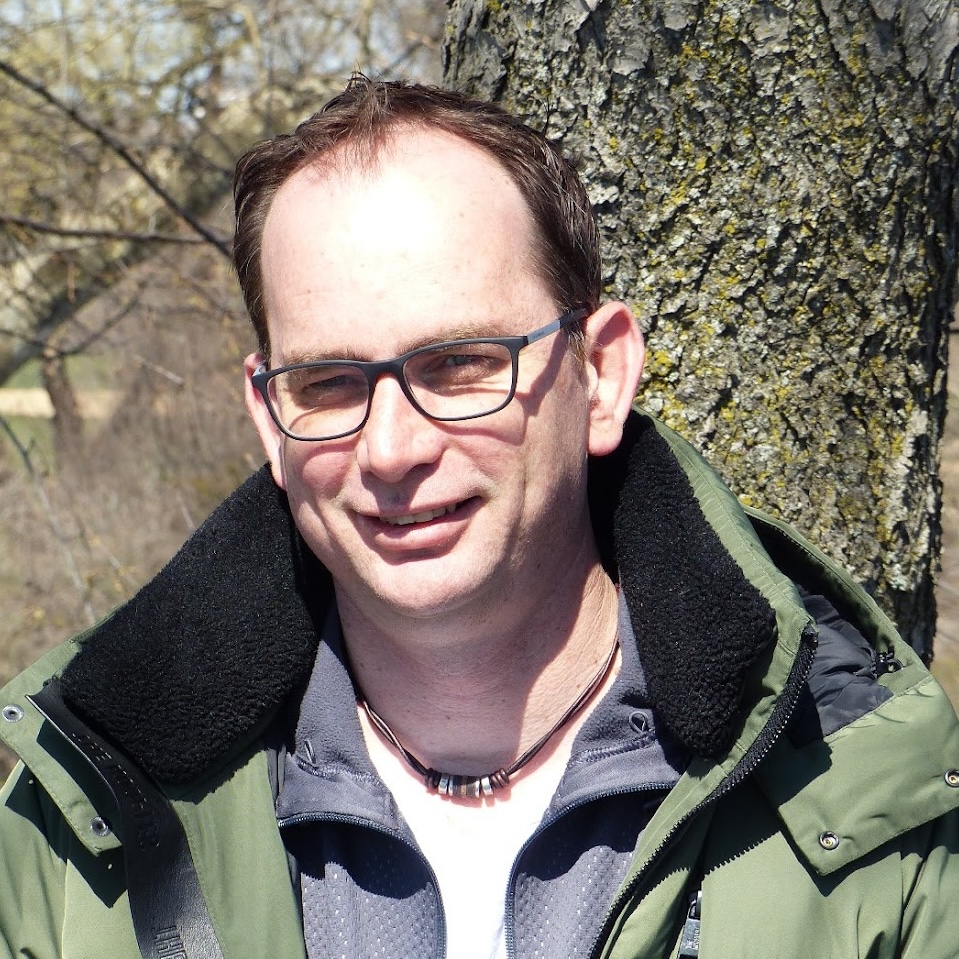
Paul Baecke
Paul Baecke

Microsoft


From Autocomplete to Co-engineer: How LLMs Are Reshaping the Software Development Lifecycle


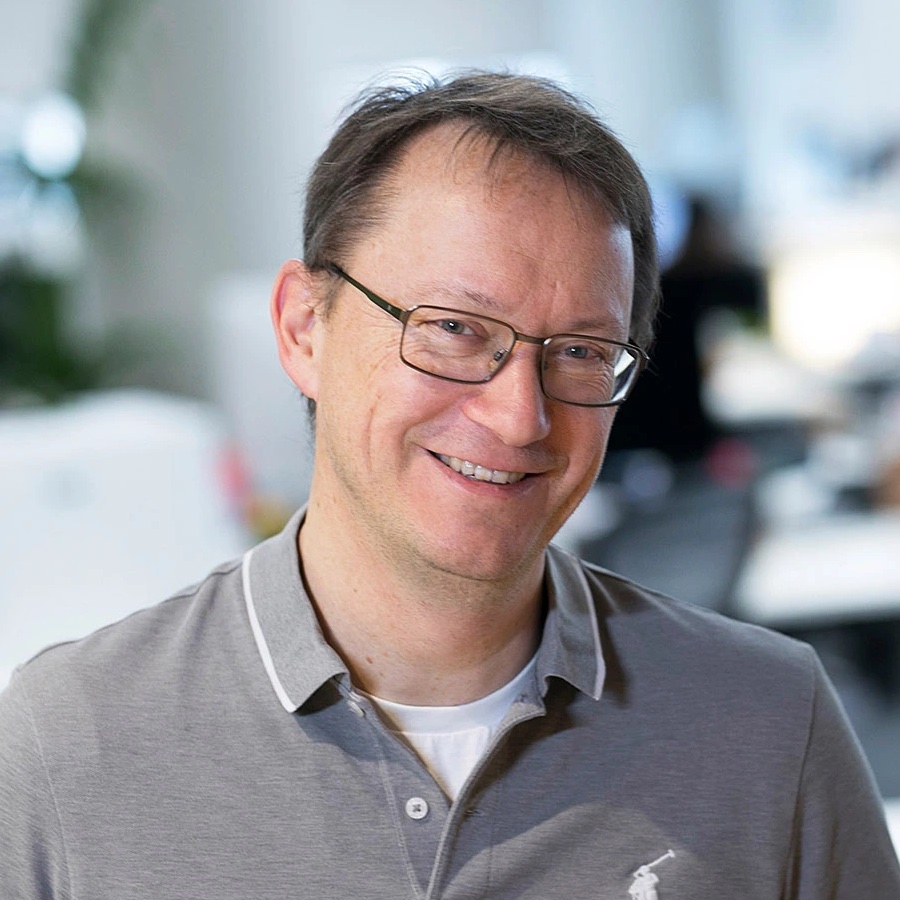
Mark Harman
Mark Harman

Meta & University College London


Just-in‑Time Testing: New on-the-fly test generation for an agentic world that prevents serious system failures

Gunel Jahangirova
Gunel Jahangirova

King's College London


Large Language Models in Software Testing: Oracle Generation, Understandability, and Beyond

Michele Tufano
Michele Tufano

Google


Scaling Agentic Program Repair at Google

Gabriele De Vito
Gabriele De Vito

UniSA


Advancing Automated Issue Report Classification with LLMs

Fiorella Zampetti
Fiorella Zampetti

UniSannio


Trustworthiness, legal and ethical aspects in AI-driven software engineering

Credits

ISSSE allows participants to obtain ECTS credits. The number of credits (minimum 3) may vary depending on the assessment completed. To obtain certification, participants are required to pass a final evaluation. For further information, please contact fferrucci@unisa.it.

Student Talks Submission

In this year's edition, Ph.D. and undergraduate/graduate students can submit a talk for the ISSSE Student Talk Session to discuss ideas and gather feedback on ongoing research. ISSSE accepts presentation abstracts (max 2 pages) for review for relevance. ISSSE does not have proceedings, but the contributions will be available on this website. Presentation abstracts can be either novel research results or results that have already been published or are ready to be submitted to a conference or journal. Of particular interest are summaries that aim to provoke discussion, open new avenues for challenge, etc.
To prepare your talk to ISSSE, please adhere to this latex style, two-column style (sample-2col.tex and ceurart.cls), which is also available on Overleaf, and submit through the Easychair platform.
The deadline for student talk proposal is the May 28th. Acceptance notifications will be sent by May 30th.

Venue and Accommodation

ISSSE will be held at the University of Salerno's computer science department, located a few kilometers from Salerno at the junction of motorway intersections—more details at https://web.unisa.it/en/home.

The best way to reach the campus from abroad is first to go to Salerno. The nearest International Airport is Naples Capodichino (code NAP). You can take a bus (Alibus) from the airport to the central station in Naples and get off here for connections to Salerno through high-speed and traditional train services.

Regarding accomodation, we recommend you stay in Salerno. Salerno is located about 60 km south of Naples and is considered a gateway to the Amalfi Coast. It offers much, from a medieval city center that takes you back to its ancient and prestigious origins to a seafront with modern and avant-garde architecture.

Frequent buses connect the city to the university. Specifically, buses 7 and 17 ("Linea 7" and "Linea 17" in Italian) run from the Salerno train station (Salerno FS) to the university terminal, which is a short walk from the school.
More information on the bus route can be found on the main page of Busitalia.
A dedicated app, Unico Campania, is available for Android and iOS and allows users to quickly find and buy bus and train tickets. The app can be downloaded for Android or iOS (Italian language only!).

Registration

Registration fees are 500€ for academic and industrial researchers and 350€ for PhD students (proof required). They include admission to all lectures, slides and other materials prepared by the lecturers, luncheons, coffee breaks, and social functions.
Participants may also register for individual tutorials. In this case, the fee is 100€ for each selected tutorial and includes admission to the tutorial, slides and materials prepared by the lecturer, luncheons, and coffee breaks.
The deadline for registration is May 28, 2026.

ISSSE 2026 Program

Date Time Event

15
Monday
June, 2026

13:30 - 14:30 Registration & Welcome Reception (light lunch)
14:30 - 15:00 Welcome & Introduction
15:00- 16:30 Mark Harman — Meta & University College London
Just-in-Time Testing: New on-the-fly Test Generation for an Agentic World that Prevents Serious System Failures
16
Tuesday
June, 2026
09:00- 10:30 Paul Baecke — Microsoft
From Autocomplete to Co-engineer: How LLMs Are Reshaping the Software Development Lifecycle
10:30 - 11:00 Coffee break
11:00 - 12:30 Fiorella Zampetti — University of Sannio
Trustworthiness, Legal and Ethical Aspects in AI-driven Software Engineering
12:30 - 14:00 Lunch break
14:00 - 15:40

Toward Uncertainty-Aware Agentic Testing of Cyber-Physical Systems

Karoline Nylænder

Enhancing REST API Reliability through Anti-pattern Analysis and Semantic-Aware Agentic Testing

Sofia Mari

What are we measuring when we evaluate agentic test generation?

Andrea Lops

Bridging Human Intent and Agentic Action: A Process Theory of Requirements Engineering for GenAI Agents?

Alfonso Cannavale

Mind Your Language: How You Ask LLMs Shapes the Code You Get

Antonio Della Porta
15:40 - 16:10 Coffee break
16:10- 17:30

Leveraging Compiler Knowledge for Precise CFG Analysis of Solidity Smart Contracts

Amedeo Zampieri

Automated Generation of Issue-Reproducing Tests by Combining LLMs and Search-Based Testing

Konstantinos Kitsios

Minimizing False Positives in Smart Contract Vulnerability Detection: An Intelligent Orchestrator

Gerardo Iuliano

Intra-simulator Parallelization of Scenic Simulation-based Testing for Autonomous Vehicles

Antonio Trovato

Bias Ahead: Sensitive Prompts as Early Warnings for Fairness in Large Language Models

Martina De Lucia
20:30 Social Dinner at Grand Hotel Salerno

17
Wednesday
June, 2026

09:00 - 10:00 Gunel Jahangirova — King’s College London
Large Language Models in Software Testing: Oracle Generation, Understandability, and Beyond (Part 1)
10:00 - 10:30 Coffee break
10:30 - 11:30 Gunel Jahangirova — King’s College London
Large Language Models in Software Testing: Oracle Generation, Understandability, and Beyond (Part 2)
11:30 - 12:30 Gabriele De Vito — University of Salerno
Advancing Automated Issue Report Classification with LLMs
12:30 - 14:00 Lunch break

18
Thursday
June, 2026

09:00 - 10:30 Michele Tufano — Google
Scaling Agentic Program Repair at Google (Part 1)
10:30 - 11:00 Coffee break
11:00 - 12:30 Michele Tufano — Google
Scaling Agentic Program Repair at Google (Part 2)
12:30 - 12:40 Closing
13:00 - 14:00 Lunch

Contacts

Software Engineering Lab Salerno (SESA Lab): sesalab@unisa.it